From AI Literacy to AI Fluency
It's 2026. The initial wave of AI hype has crashed, receded, and left us with a stark reality on the shore: buying the tools was the easy part.
Over the last three years, I've watched countless organizations mount jet engines onto wooden stagecoaches. They have the power, the enterprise licenses, the LLMs, the custom agents—but they are still operating with workflows designed for 2019. They are ticking the box of "adoption" without achieving the rhythm of transformation.
The problem isn't the technology. The problem is that we have confused AI Literacy with AI Fluency. If we want to unleash actual human potential, to let our teams focus on the "soul" of the work rather than the grind of the process—we have to understand the massive gap between these two concepts.
The Numbers Don't Lie
We are facing a crisis of utilization, not access. The data from this year is unambiguous. According to McKinsey, the demand for AI fluency has grown 7x in just two years, outpacing every other technical skill. Yet, Deloitte's 2026 report indicates that 62% of workers still require significant upskilling to work effectively alongside these systems.
The most damning statistic, however, is the execution gap. While 78-80% of organizations have deployed AI tools across their enterprise, only 6% of employees report feeling comfortable using them to drive decisions. We have saturated the workplace with intelligence, but we haven't equipped the workforce with the judgment to wield it.
What is the Difference Between AI Literacy and AI Fluency?
For the sake of clarity, let's break down exactly what separates these two stages of maturity.
AI Literacy is the "What." Literacy is foundational. It means your team understands what AI is. They know how to log in, they understand the basics of prompt engineering, and they can use a tool to complete a discrete task—like summarizing a meeting note or drafting a generic email.
- The limitation: Literacy is static. It relies on templates and guidance. It is checking a box.
AI Fluency is the "How" and "Why." Fluency is adaptive. It is the ability to confidently, independently, and strategically weave AI into complex workflows. A fluent marketer doesn't just ask AI to "write a blog post"; they use AI to analyze customer sentiment, structure an argument, and iterate on tone, all while knowing exactly when to take the wheel back to inject human nuance.
- The unlock: Fluency is dynamic. It drives measurable business impact and execution speed.
Why the Shift to Fluency Matters Now
Most teams today are stuck at the literacy stage. They are "experimenting." But as I've said before, experimentation is not execution. Here is why shifting to fluency is urgent:
- Speed to Insight: In a fluent organization, AI handles the data crunching and pattern recognition instantly. This frees the human mind to do what it does best: synthesize, judge, and empathize.
- Context Preservation: Literate users treat every prompt like a blank slate. Fluent users understand how to preserve context across workflows, ensuring that the brand voice and strategic intent don't get lost in the handoff.
- Predictable Delivery: Literacy gives you variance; fluency gives you rhythm. The best teams aren't powered by frantic activity; they are guided by a structured rhythm where AI handles the scale, and humans provide the direction.
Lessons from the India AI Impact Summit 2026
I witnessed this shift firsthand last week in New Delhi at the India AI Impact Summit. The scale was staggering—35,000+ participants, 120 U.S. CEOs, and a palpable energy that India is moving from an AI consumer to a global architect of the AI agenda.
As a Knowledge Partner to the USISPF, I had the privilege of moderating a panel titled "Unleashing Human Potential in the Age of Intelligence." Sharing the stage with CTOs from GE Healthcare, HCLTech, and LinkedIn India, the consensus was sharp and immediate.
We didn't talk about code. We talked about judgment. The leadership at GE Healthcare noted that while AI democratizes diagnostics, the accountability remains human. HCLTech highlighted that their growth depends not on replacing people, but on enabling them to handle higher-order problems.
The key takeaway? AI augments judgment; it doesn't replace it. In a world of infinite content and synthetic data, human intuition is the scarcest resource. The summit made it clear: the next era belongs to those who can lead with AI, not just those who can use it.
The Human Element: Scale for Efficiency, Humans for Soul
There is a fear that "fluency" means automation, and automation means replacement. I see it differently.
When you are fluent in a language, you don't have to think about the grammar; you just express yourself. AI fluency is the same. When the tools become second nature, the technology recedes into the background, and human creativity comes to the foreground.
We are entering an era where the competitive advantage doesn't belong to those with the best models, but to those with the most fluent teams. The goal isn't to build a machine that runs without us. The goal is to build a workflow where the machine handles the entropy, the noise, the repetition, the formatting, so that we can focus on the signal.
It is time to stop experimenting with the engine and start driving the car. Move your teams from literacy to fluency, and you won't just see better metrics; you'll see happier, more creative humans.
Frequently Asked Questions
Q. What is the difference between AI literacy and AI fluency?
A. AI literacy is Foundational knowledge, understanding what AI is and how to use basic tools for simple tasks. AI fluency is advanced capability, the ability to confidently integrate AI into complex workflows, exercise judgment, and drive measurable business impact.
Q. Why is AI fluency more important than AI literacy?
A. While literacy gets you started, fluency drives results. Organizations with AI-fluent teams see faster execution, better context preservation, and predictable delivery. Fluency transforms AI from a novelty into a competitive advantage.
Q. How long does it take to move from AI literacy to fluency?
A. It varies by organization, but most teams need 6-12 months of hands-on, workflow-embedded practice to achieve fluency. The key is "learning by doing" rather than theoretical training.
Q. How can organizations build AI fluency across their workforce?
A. Focus on real-world application over classroom training. Embed AI into daily workflows, provide continuous learning opportunities, and ensure human judgment remains central to AI adoption. Prioritize hands-on practice with measurable outcomes.


Harjiv Singh
As the Founder & CEO of CambrianEdge.ai, he is shaping the future of marketing through human-AI collaboration. With over 20 years of experience, he is dedicated to advancing AI-driven, human-centered marketing.

Share with your community!
Related Blogs
View All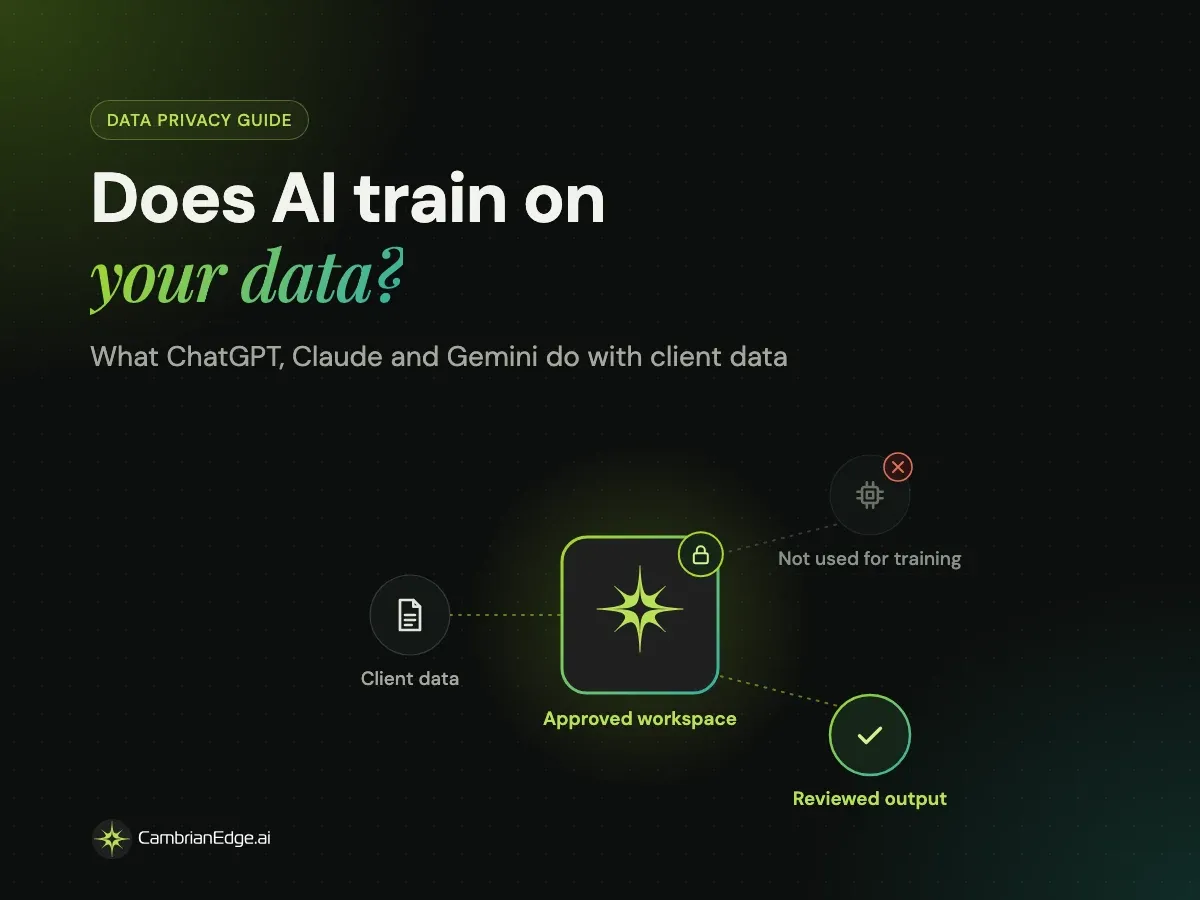
Does AI train on your data? What ChatGPT, Claude and Gemini do with client data

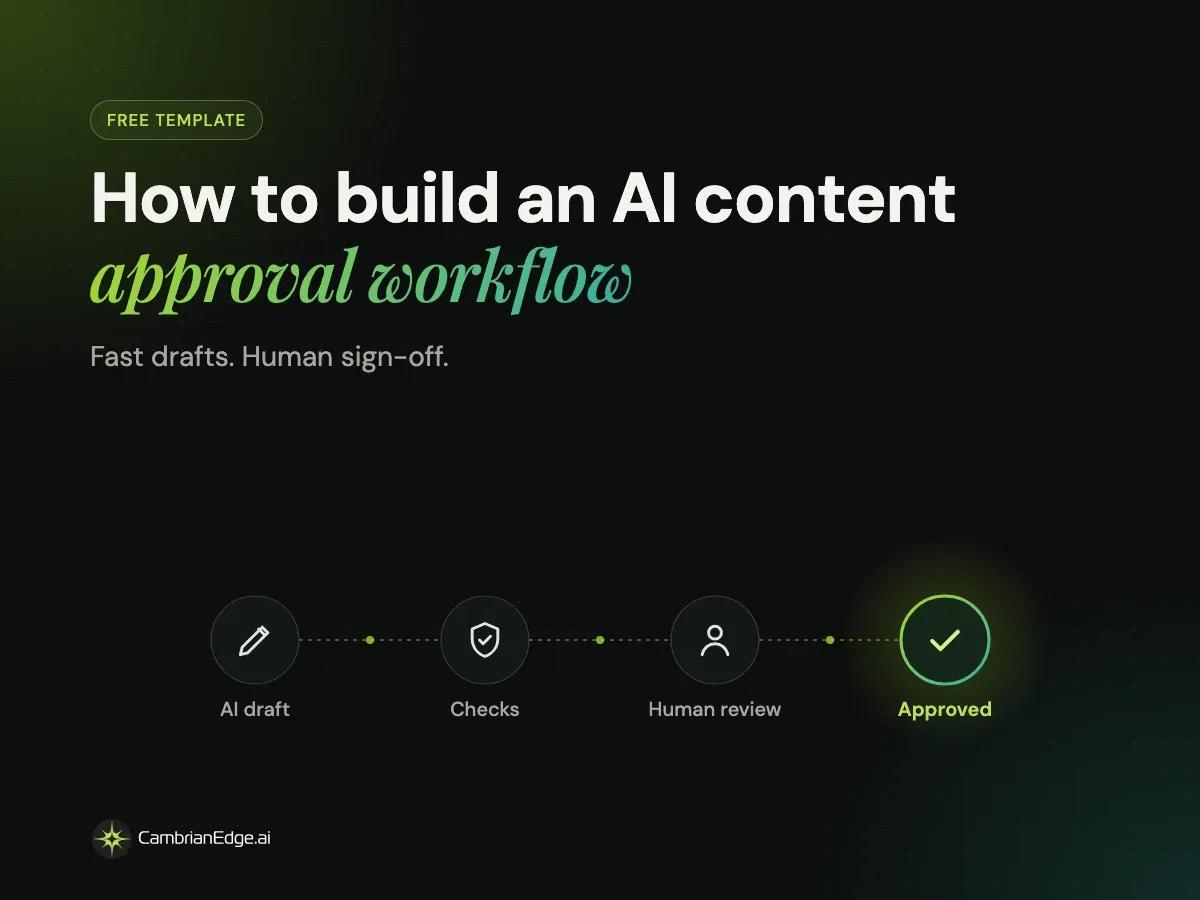
How to build an AI content approval workflow (free template)

Best AI tools for marketing agencies in 2026, picked by job