The House of Lords and the Future of AI Collaboration
A few miles from the House of Lords, where we gathered last week to launch CambrianEdge.ai in the UK, sits the birthplace of Philosophical Transactions - the world's first scientific journal, founded in 1665. Its real contribution wasn't the printing press behind it. It was the idea that knowledge compounds only when judgment becomes social. A century later, physicists at Cambridge's Cavendish Laboratory proved the same point in practice: breakthroughs came from teams arguing openly, not individuals working alone.
That history sat quietly behind everything we discussed last week, as we released our inaugural research report, AI at Work: The Collaboration Gap 2026.
The finding is hard to ignore. Tracking 775 users across 104 organizations, the study found that 55% of professionals cite isolated, solo AI usage as their biggest operational drag. Nearly one in five organizations surveyed have already rolled back AI initiatives entirely, undone by quality problems that solo tools were never built to catch. For several years now, the market has treated AI adoption as an exercise in swapping lightbulbs - plugging individual subscriptions into buildings whose wiring never changed.
Better bulbs don't fix a broken floor plan. Organizations don't get leverage from more standalone tools. They get it from rearchitecting how people and AI work together.
Our panel, drawn from academia, aviation, and physics, kept arriving at variations of this same point. Kristin Harlan of Stanford's Graduate School of Business argued that real transformation means retiring the disconnected browser tab and building collaboration into the workflow itself. Marcus Sigurdsson reached for aviation: co-pilots exist precisely so no single point of judgment is ever fully trusted, a discipline enterprise have yet to apply to their own AI deployments. Dr. Siddharth Saxena of Cambridge University brought it back to first principles - progress has always depended on managing uncertainty through structure and shared ethos, not on the tool alone. And our host, Lord Raj Loomba CBE DL, kept the conversation anchored in governance, noting that even as the technology matures at speed, judgment, collaboration, and accountability remain stubbornly human responsibilities.
When a physicist, a business school academic, and a peer of the realm independently land on the same conclusion, it's worth paying attention. It tells you something has shifted in how the market understands this technology.
We built CambrianEdge.ai to close that gap - an AI-native workspace where shared environments, structured handoffs, and governance aren't bolted on afterward but designed in from day one. A different floor plan altogether.
Thank you to our research partners, our panelists, and everyone who joined us in London to carry this conversation forward.
In short: CambrianEdge.ai's inaugural research shows that 55% of professionals see solo AI use as their top operational drag, and 18% of organizations have rolled back AI initiatives due to quality issues - evidence that enterprise AI's real bottleneck is collaboration architecture, not individual tools.

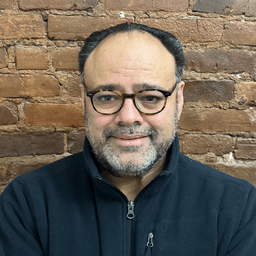
Harjiv Singh
As the Founder & CEO of CambrianEdge.ai, he is shaping the future of marketing through human-AI collaboration. With over 20 years of experience, he is dedicated to advancing AI-driven, human-centered marketing.