AI Systems Need a Recovery Plan, Not Just a Model Strategy
Most corporate AI roadmaps focus entirely on model selection: comparing benchmark evaluations, negotiating API pricing, and deploying vendor-specific tools. However, foundation models represent an external dependency subject to rapid shifts in pricing, platform availability, algorithmic drift, and vendor roadmap changes.
An enterprise that hardcodes its core operational workflows to a single proprietary model provider introduces severe systemic fragility. A comprehensive enterprise AI strategy requires a robust operational recovery plan, ensuring the organisation maintains continuity, governance, and institutional context when underlying models evolve or fail.
Fragile Point Solution Setup:
Workflows Hardcoded to Vendor API → Vendor Outage / Policy Shift → Operational Disruption
Resilient Composable Setup:
Stable Workflow Layer (Context & Logic) → Dynamic Model Abstraction → Seamless Engine Continuity
The Hidden Vulnerabilities of Single-Vendor AI Stacks
Relying exclusively on a single artificial intelligence provider exposes enterprise operations to multiple points of failure:
- Algorithmic Drift and Undocumented Updates: Foundation model providers frequently update model weights, which can alter output formatting, tone, and reasoning capabilities without notice. These changes can quietly break automated enterprise pipelines and degrade campaign quality.
- Vendor Lock-in and Cost Escalation: Building custom business logic around a proprietary ecosystem creates severe switching costs. If a vendor changes its enterprise pricing structure or alters usage terms, the organisation faces an expensive trade-off between higher operational costs and complete platform re-engineering.
- Platform Outages and Rate Limiting: As global demand for computational infrastructure grows, API rate limits and unexpected service downtime can bring automated enterprise operations to a sudden halt, delaying time-critical campaign deployments.
- Loss of Institutional Memory: When marketing teams interact with AI solely through third-party chat interfaces, valuable prompts, iterations, and brand refinements remain trapped within external logs rather than compounding into internal intellectual property.
Core Components of an AI Operational Recovery Plan
A resilient AI operating strategy does not treat models as permanent fixtures. Instead, it designs an infrastructure where the organisation owns the workflow, the context, and the governance layer, treating foundation models as interchangeable computational engines.
1. Architectural Model Agnosticism
A model-agnostic infrastructure abstracts the intelligence layer from the operational workflow. Applications connect to an orchestration layer that standardises data inputs and model responses. If an underlying model suffers an outage or performance drop, administrators can redirect tasks to alternative models within seconds, maintaining complete operational continuity.
2. Centralised Context and Data Provenance
To protect institutional knowledge, enterprises must maintain a unified data substrate where briefs, style guides, customer research, and campaign histories are securely stored. When context is preserved within an internal operating environment, teams can transition between different models without losing historical knowledge or retraining staff.
3. Human Oversight Fail-Safes
Autonomous background scripts can fail silently, compounding subtle errors across connected enterprise systems. An effective recovery plan mandates that critical decision gates, compliance checks, and final approvals remain within human control. Exposing intermediate logic in a collaborative canvas ensures that specialists can detect anomalies early and adjust system parameters before outputs reach customers.
4. Dynamic Multi-Model Routing
A resilient framework routes operational tasks based on real-time availability, performance requirements, and cost parameters. Standard text formatting can be routed to fast, cost-efficient models, while complex analytical tasks are sent to high-reasoning engines. This ensures operational reliability while managing compute expenditures.
Building Sustainable Enterprise Resilience
Enterprise leaders must recognise that their workflow should outlive any individual AI model. Models will continue to evolve, commoditise, and change. The organisations that thrive over the next decade will not be those that picked a specific model early, but those that built an agile operating environment capable of absorbing any new capability safely and seamlessly.
By implementing a model-agnostic, human-led collaboration layer, enterprises insulate themselves from vendor disruption, maintain strict regulatory compliance, and unlock sustained operational leverage.
Frequently Asked Questions
- What is an enterprise AI recovery plan?
An AI recovery plan is an operational strategy that enables a business to maintain workflow continuity, data integrity, and governance when underlying AI models experience outages, updates, or vendor pricing changes.
- How does model agnosticism protect against vendor lock-in?
Model-agnostic systems separate business workflows from specific model APIs, allowing enterprises to switch between foundation models without redesigning their internal processes or retraining staff.
- Why is data provenance important in AI resilience?
Data provenance tracks the origin, prompts, and context behind AI-generated outputs, ensuring that the organisation retains ownership of its institutional knowledge regardless of which external tools are used


Vishal Sharai
Technical leader driving CambrianEdge.ai's architecture and AI innovation, building scalable, reliable systems that turn ambitious ideas into seamless experiences powering human-centered, high-impact marketing.

Share with your community!
Related Blogs
View All
Does AI train on your data? What ChatGPT, Claude and Gemini do with client data

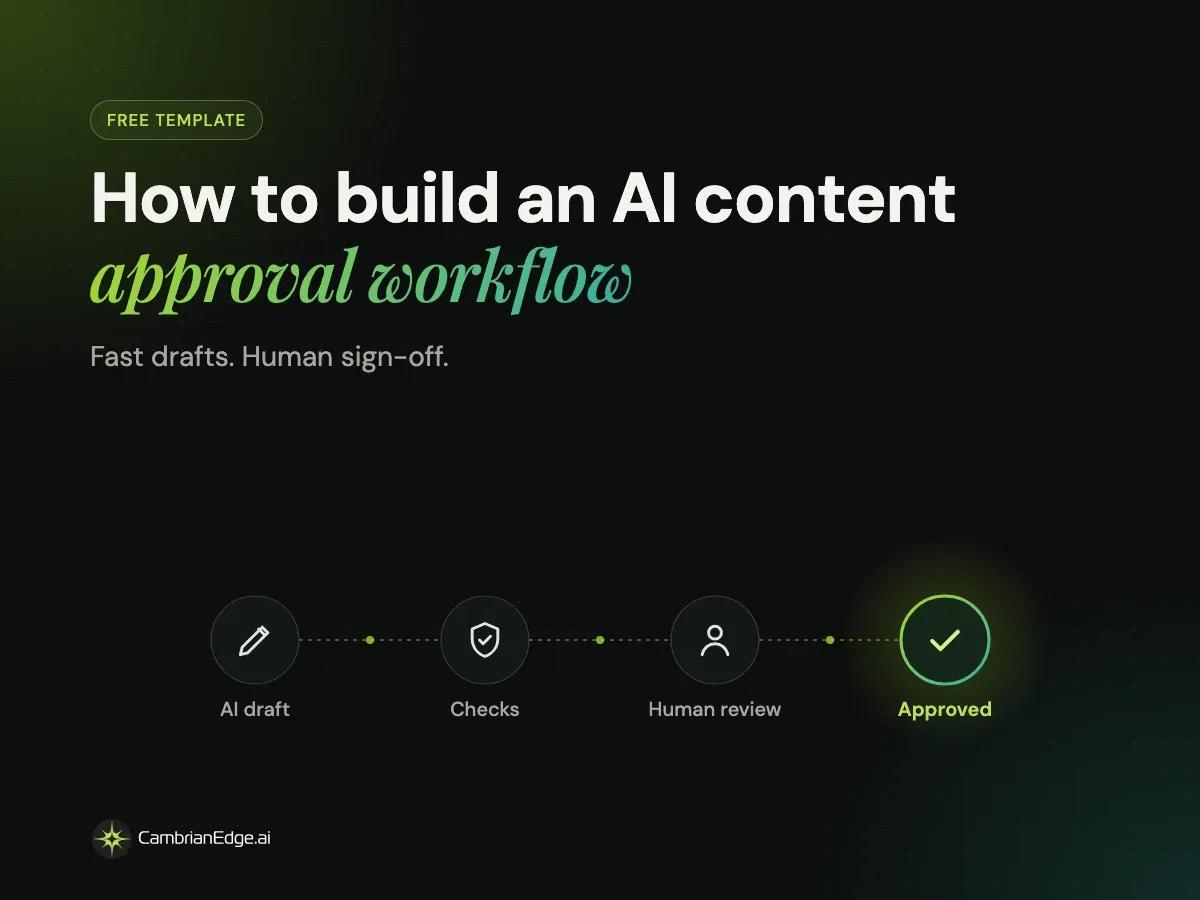
How to build an AI content approval workflow (free template)

Best AI tools for marketing agencies in 2026, picked by job